
Arduino MKR Zero Description
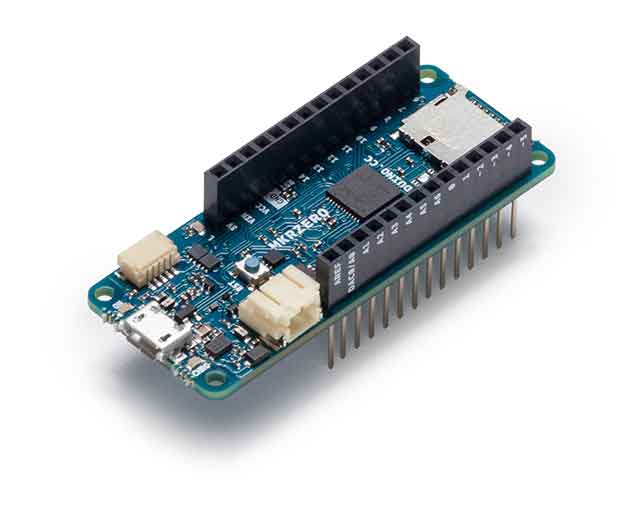
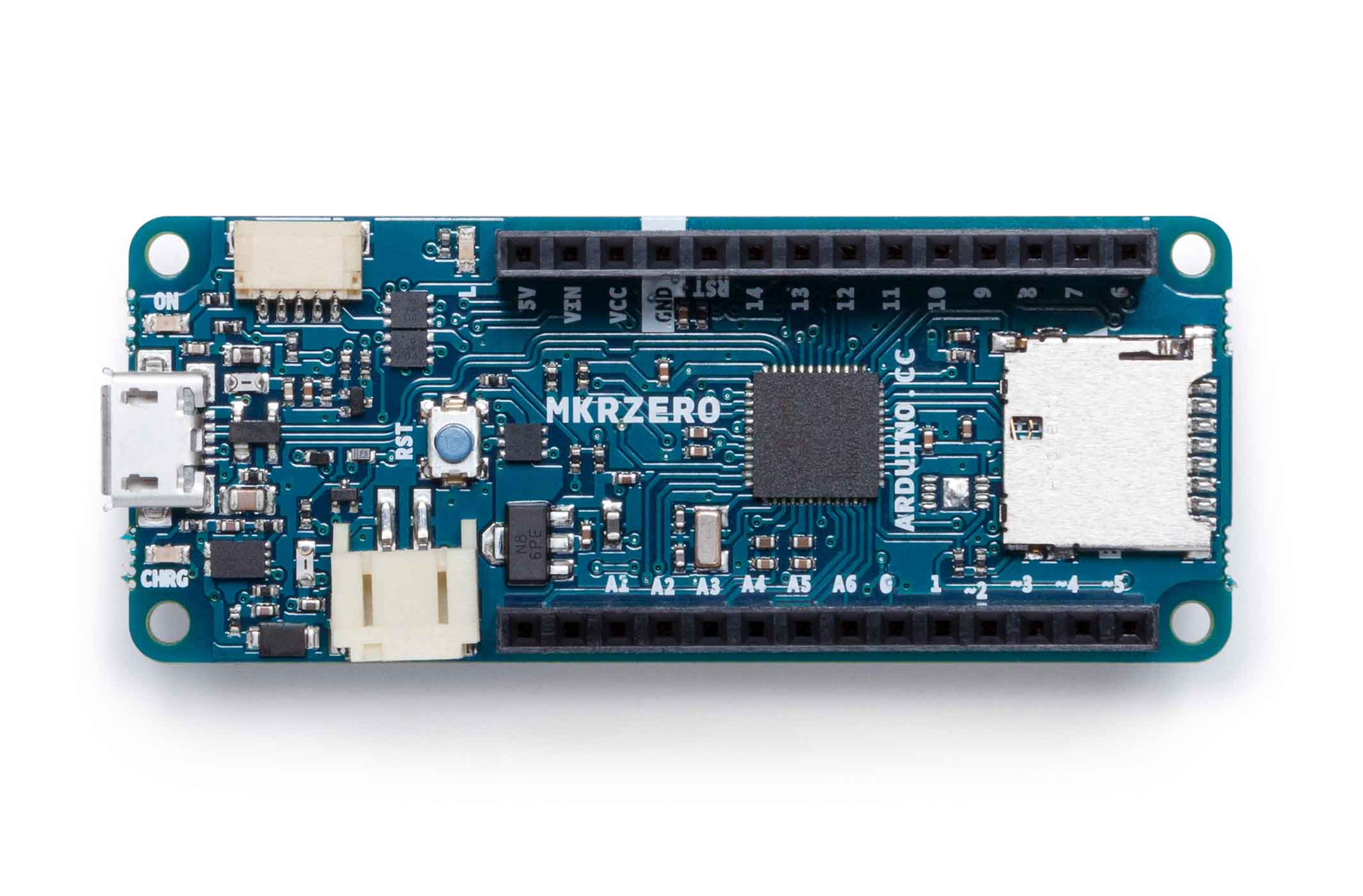
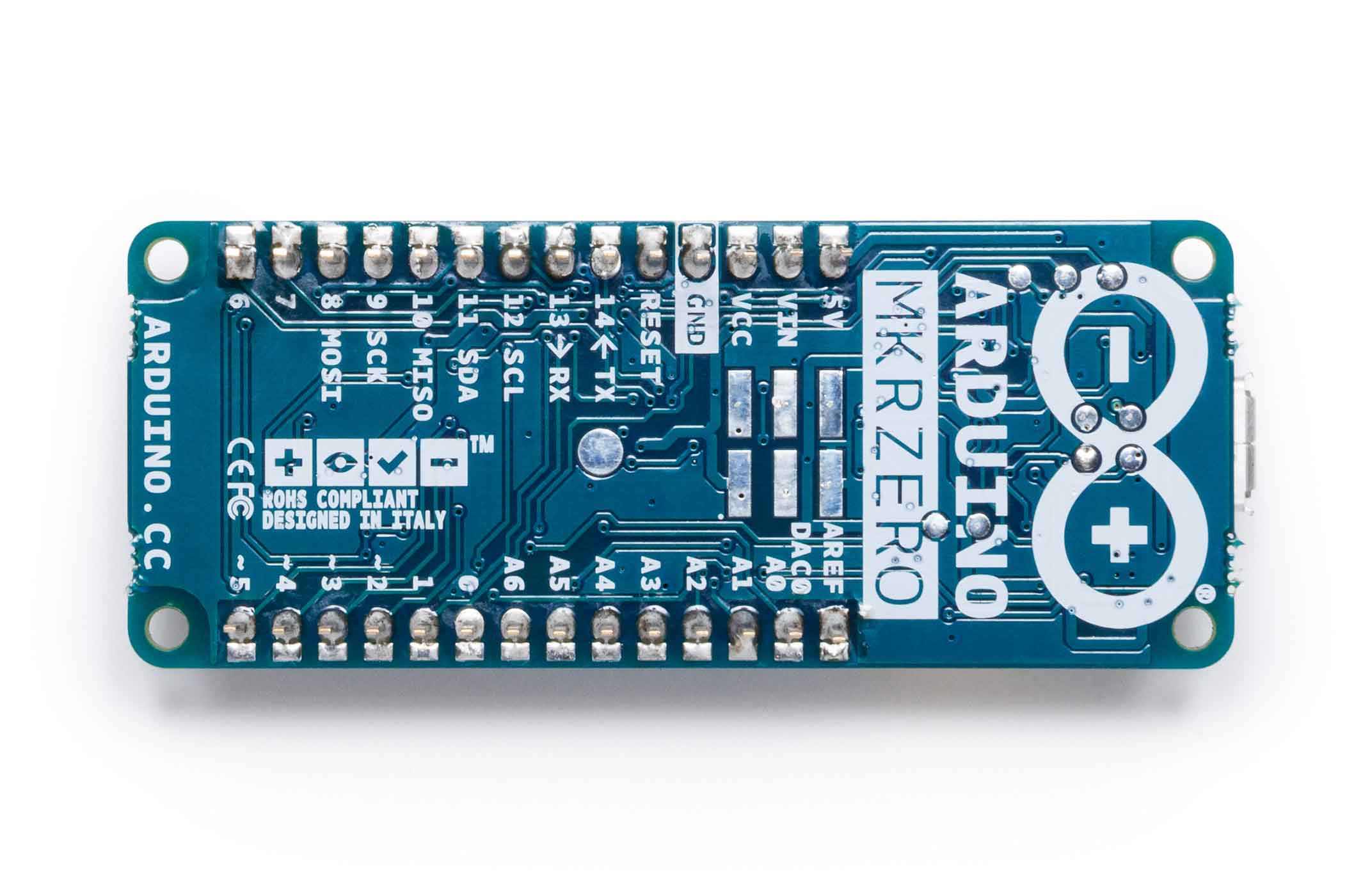
The MKR ZERO gives you the power of a Zero in the smaller size defined by the MKR form factor.
The MKR ZERO board serves as a great educational tool for learning about 32-bit application development.
It has a built-in SD connector with dedicated SPI interfaces (SPI1) that allow you to play MUSIC files without any additional hardware!
This board is powered by Atmel's SAMD21 MCU, which features a 32-bit ARM Cortex® M0+ core.
Warning : Unlike most Arduino boards, the MKR Zero runs at 3.3V.
The maximum voltage that the I/O pins can tolerate is 3.3V.
Applying voltages higher than 3.3V to any I/O pin may damage the board.
Although output to digital 5V devices is possible, bidirectional communication with 5V devices must be properly relocated.
The board includes everything needed to support the microcontroller; simply connect it to a computer with a micro USB cable or power it with a LiPo battery.
The battery voltage can also be monitored, as there is a connection between the battery and the board's analog converter.
Arduino MKR Zero
SKU: MKR1006
- Order before 4:00 PM = shipped today
- Free shipping from €99.95
- 14 days free returns
Arduino MKR Zero Description
The MKR ZERO gives you the power of a Zero in the smaller size defined by the MKR form factor.
The MKR ZERO board serves as a great educational tool for learning about 32-bit application development.
It has a built-in SD connector with dedicated SPI interfaces (SPI1) that allow you to play MUSIC files without any additional hardware!
This board is powered by Atmel's SAMD21 MCU, which features a 32-bit ARM Cortex® M0+ core.
Warning : Unlike most Arduino boards, the MKR Zero runs at 3.3V.
The maximum voltage that the I/O pins can tolerate is 3.3V.
Applying voltages higher than 3.3V to any I/O pin may damage the board.
Although output to digital 5V devices is possible, bidirectional communication with 5V devices must be properly relocated.
The board includes everything needed to support the microcontroller; simply connect it to a computer with a micro USB cable or power it with a LiPo battery.
The battery voltage can also be monitored, as there is a connection between the battery and the board's analog converter.